Who's Driving Innovation in the U.S.?
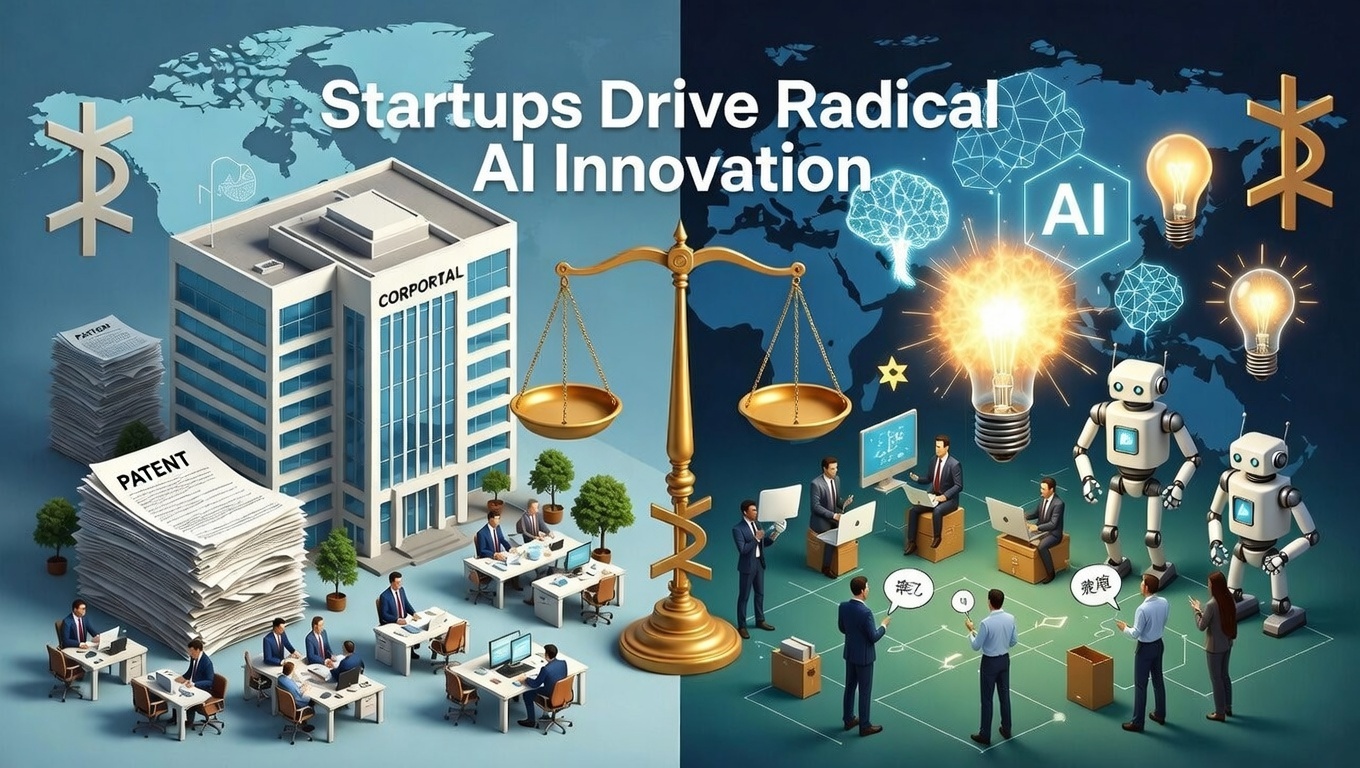
A recent U.S. Census Bureau analysis from Nathan Goldschlag provides data-based support for an intuitive dynamic: older, established firms generate more patents, but younger startups produce the more radical, impactful innovations.
For AI startups and attorneys advising them, this dynamic is particularly relevant:
Key Insights for AI Innovation
- Radical AI Breakthroughs from Startups: Startups may file fewer patents overall, but their innovations often shape industries, create new markets, and pioneer AI applications in traditional sectors like manufacturing or healthcare.
- Earnings vs. Impact Trade-Off: Inventor-employees at large firms earn more (with a 12% salary bump when joining incumbents), but their patents are less cited (35% fewer citations) and more incremental. In AI, this could mean talented researchers at corporations focus on refining existing systems rather than disruptive innovations, such as novel neural architectures or pioneering uses in legacy industries.
- Global Talent's Role: Foreign-born inventors, particularly from China and India (whose share among U.S. inventors rose 59% from 2000-2016), are increasingly central to high-impact patents. This underscores AI's reliance on worldwide talent, highlighting the need for the U.S. to attract and incentivize global AI innovators to drive progress domestically.
- Growth and Job Creation: Startup-created innovations correlate with faster company growth (nearly 70% employment increase for surviving inventor-founded firms) and job creation, highlighting the value of protecting IP early for emerging AI ventures.
The AI Patent Challenge
The article's general patent trends, which are based on data up to 2016 (predating the AI boom), implicate unique AI challenges: Patenting AI innovations is trickier due to evolving standards for patent-eligibility, potential issues with enablement, and increasingly crowded prior art. As a patent lawyer advising AI startups, understanding how to identify radical innovation when it happens—and implement strategies to secure and monetize it—is more critical than ever to attract funding, protect market position, and defend against competitors.
What IP strategies have you seen work (or fail) for AI startups in this environment? Share them in the comments.
Read the full story here: https://lnkd.in/e3e3qzJB