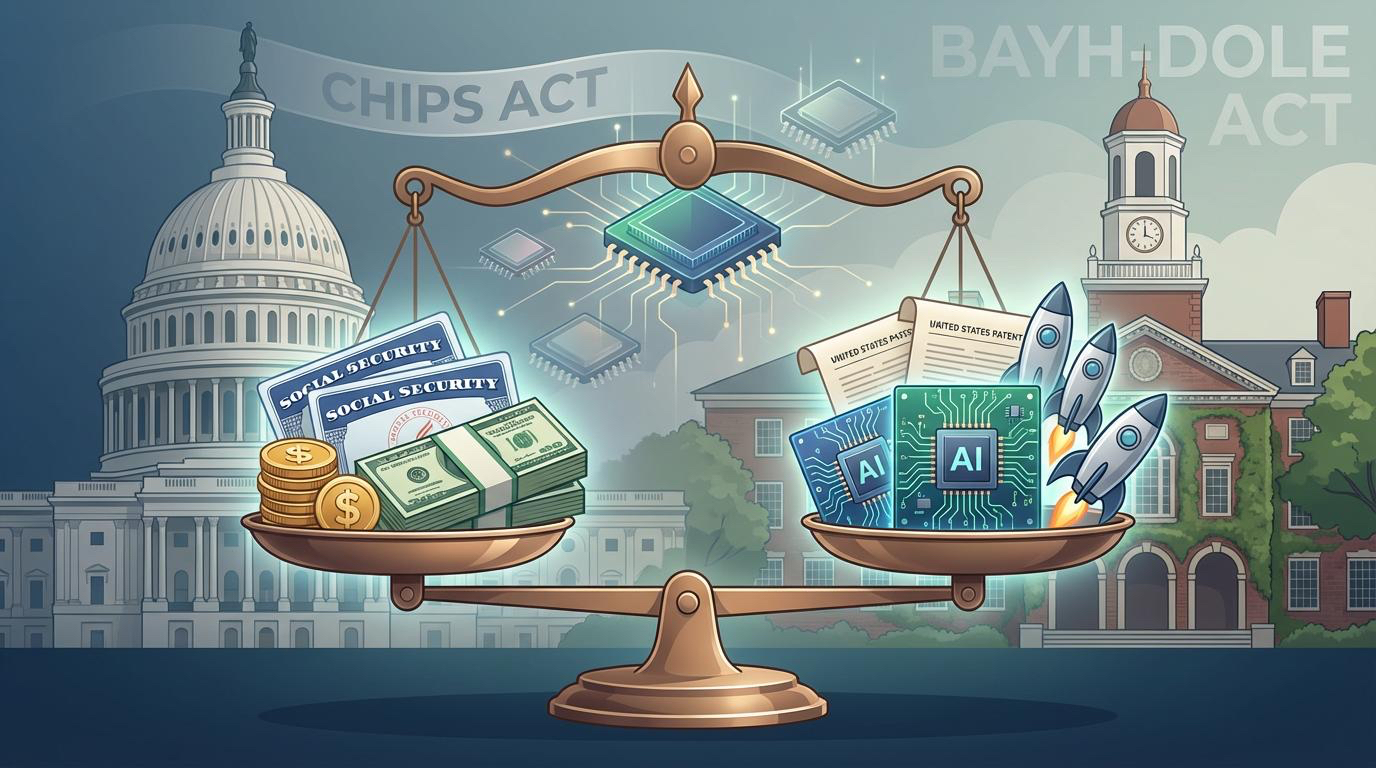
🚨 Big shift ahead for U.S. innovation under the Trump administration? As reported by Dan Primack at Axios, Commerce Secretary Howard W. Lutnick is advocating for the federal government to claim a revenue share from university patents funded by federal grants—applicable to $50B in annual research funding without direct return on the investment for taxpayers. https://is.gd/vGzCwA.
Background: The Bayh-Dole Act Revolution
For background, the Bayh-Dole Act of 1980 revolutionized U.S. innovation by allowing universities to own and commercialize patents from federally funded research, spurring startups but without providing the government a direct cut of profits. Secretary Lutnick argues it's time for a change: If a $50M grant leads to a blockbuster drug or tech breakthrough, the public should recoup more of that investment. The Secretary envisions such a mechanism could fund Social Security and slash deficits. Harvard University, for instance, earned $54M from IP commercialization last year—should the government tap into that for public benefit?
The Trade-offs: Public Benefit vs. Innovation Risk
On one hand, this proposal could amplify public benefits by channeling profits from taxpayer-funded IP back into programs like Social Security, ensuring broader public returns on federal investments. On the other, such a policy could impose higher costs on innovative companies—including some AI startups—through elevated licensing fees or revenue-sharing mandates, potentially altering VC return models and deterring risk-taking in commercialization of publicly-funded IP.
Early Implementation Signals
As of January 2026, there has been no broad implementation, but recent actions signal early steps—including a review of Harvard's Bayh-Dole compliance, with the government threatening patent 'march-in' rights to force additional licensing. https://is.gd/4VnOVv. Moreover, new NIST solicitations under the CHIPS Act require revenue sharing with the government, suggesting a more "VC-style approach" to government-funded semiconductor R&D. https://is.gd/P0kCM3. Opposition from universities and industry groups warns such a paradigm could stifle innovation—reducing indirect economic benefits to the public from tech commercialization.
Implications for AI Companies and Tech Lawyers
For AI companies licensing university IP: Expect potential hikes in licensing fees, mandatory revenue-sharing with Uncle Sam, and recalibrated VC models. Tech lawyers, time to audit funding trails and bulletproof license agreements.
How should the government balance taxpayer equity in publicly-funded IP with fostering startup growth? Is Secretary Lutnick's proposal fair play for taxpayers or a chill on tech innovation? Share your take below.