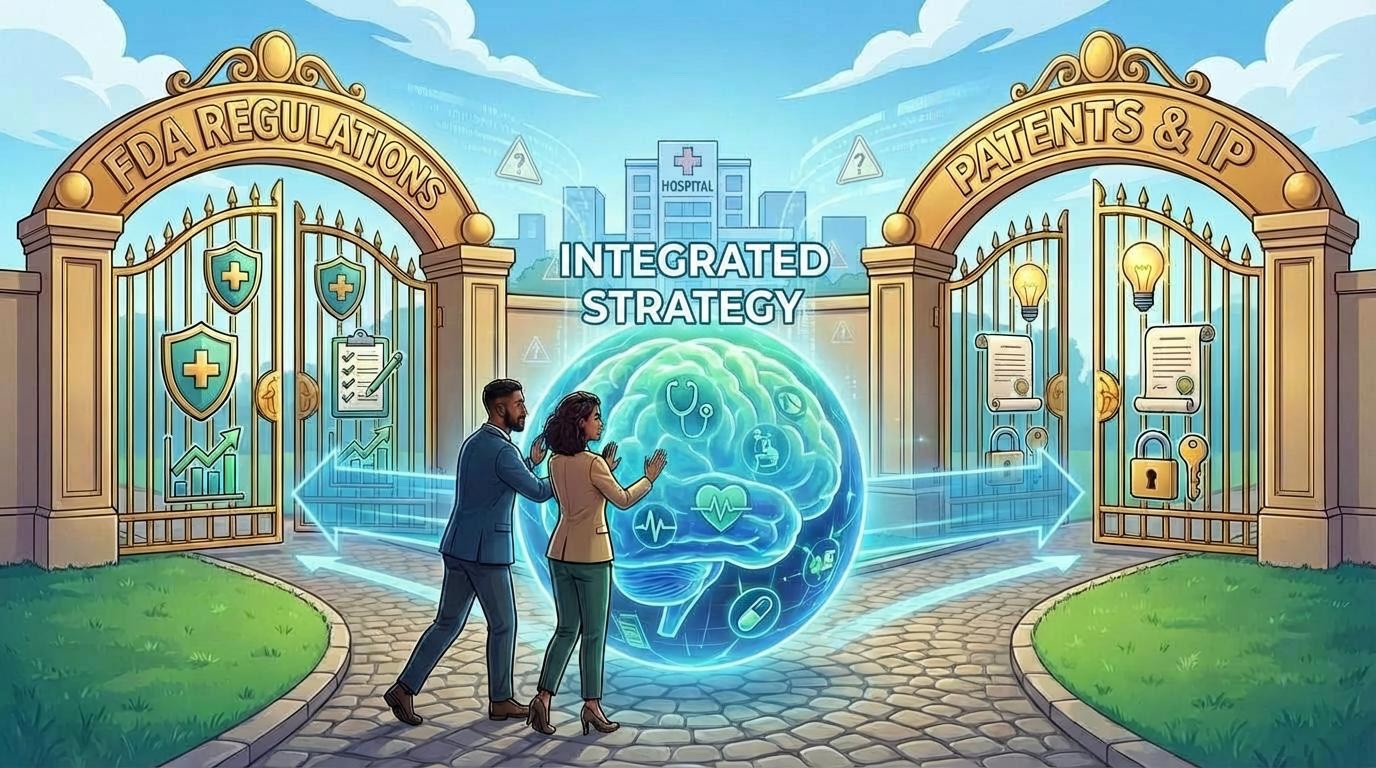
Founders building AI in health care: Ever feel like model performance is the easy part? The real grind is clearing two gatekeepers at once: FDA regs and patents.
In a recent Bloomberg Law piece (Oct 2025), Matthew Carey (partner at Marshall, Gerstein & Borun) nails a reality many teams overlook: FDA strategy (focused on patient safety) and patent strategy (geared toward incentivizing innovation) are deeply linked—even if they tackle different goals. Read it here: https://is.gd/97C3N9
Key Takeaways from the Article
- FDA (via Predetermined Change Control Plans—or PCCPs—and lifecycle oversight): If your AI model updates after launch (e.g., retraining on new data), build in validation and monitoring plans upfront. Otherwise, your fast iteration can grind to a halt with endless resubmissions.
- Patents (inventorship + eligibility under 35 U.S.C. §101): Prove clear human involvement in the invention (document everything!), and frame claims as specific technical upgrades or practical applications—not just "analyze data, spit out a recommendation." Skip this, and you'll hit roadblocks from the Supreme Court's Alice/Mayo framework on abstract ideas.
- Practical Move: Don't tackle FDA first, then patents—run them side-by-side so your regulatory playbook (validation, monitoring, updates) bolsters your patent claims (e.g., unique system architectures over vague correlations). For example, the article's hypothetical AI tool analyzes hospital data to forecast ICU bed needs, requiring clinical validation for FDA and novel tech steps for patents.
Pro Tips from Healthcare Tech Experience
Building on Matt's insights, here are a couple Pro Tips from my experience advising healthcare tech companies:
- Early Patent Due Diligence: Investigate competitive or blocking patents early—discovering one late (post-FDA approval or launch) could force a redesign, triggering fresh regulatory reviews and delaying everything, or even pulling your product off the market.
- Enablement vs. Trade Secret Balance: For patents, disclose enough details to meet enablement requirements (so a skilled expert can replicate it), but protect sensitive AI elements like proprietary datasets or algorithms as trade secrets. Leverage FDA's confidential submissions to share more without public exposure—get this wrong, and you risk weak IP or leaked competitive edges.
This is the playbook for shipping adaptive AI in clinical settings: Smart reg navigation + offensive & defensive IP strategy = long-term survivability.
Have you faced or overcome these FDA regulatory and patent hurdles in AI health tech? Drop a comment below.