Touting a law license may have hurt a self-represented patent owner in the Federal Circuit.
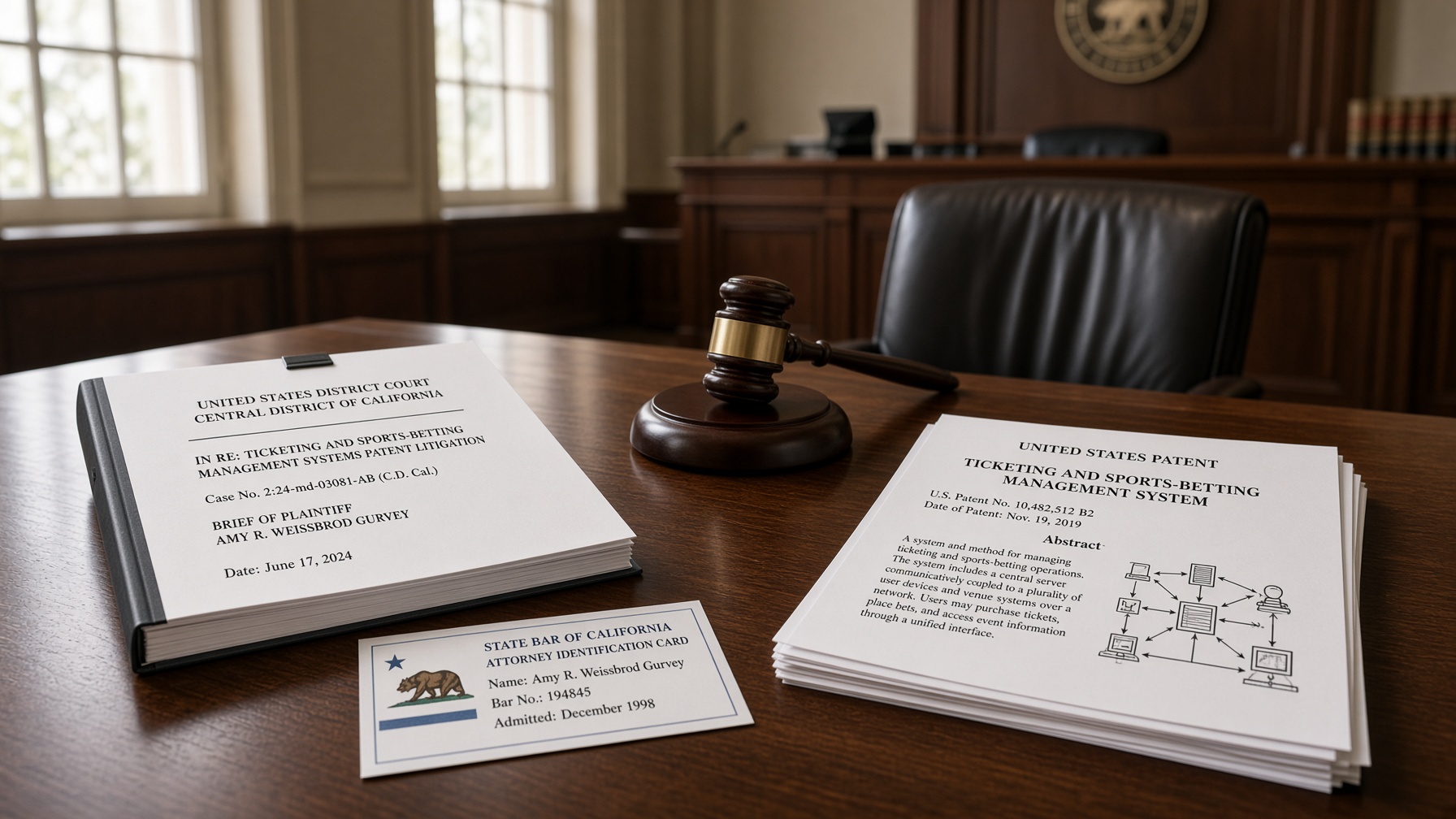
Eileen M. reports for IPWatchdog, Inc that on October 26, the Federal Circuit affirmed the dismissal of a suit Amy R. Weissbrod Gurvey brought against Live Nation, Ticketmaster, Major League Baseball, Phish, and several law firms. Ms. Gurvey asserted several patents on a ticketing and sports-betting management system. Since at least 2006, Ms. Gurvey has sued various combinations of the same defendants in federal and state courts, alleging infringement and related conspiracies.
Procedural History in the District Court
Defendants moved to dismiss the 2023 suit in the Central District of California. Ms. Gurvey filed no opposition within the 14-day deadline, received an extension to February 2, 2024, and filed none by the extended date. The district court treated the missing oppositions as consent to the motions under the court’s local rules. The court also reviewed the motions, finding venue improper for the Live Nation, Phish, and MLB defendants and the claims against one law firm barred by earlier judgments. A later order dismissed a second firm under the Noerr-Pennington doctrine, a rule protecting petitioning activity.
The Federal Circuit Appeal
On appeal, Ms. Gurvey argued that the district court had improperly dismissed the case sua sponte (on its own initiative). The panel disagreed: the defendants moved to dismiss, and the court granted the unopposed motions after repeated chances to respond. Since Ms. Gurvey never presented her substantive arguments to the district court, the panel held the arguments waived.
The panel also considered whether the missed deadlines reflected an inexperienced pro se litigant's oversight and concluded otherwise, citing Ms. Gurvey's repeated statements of good standing as a California attorney and an extensive litigation history.
Takeaways, from the local rules to the old adage:
- Pay heed to the local rules. In the Central District of California, a missing opposition may be deemed consent to the motion, so silence is a negative response — not a neutral one.
- Appellate courts are not the venue to debut arguments. An argument first raised on appeal may be deemed waived, however strong on the merits.
- The old adage warns that a lawyer who represents themself has a fool for a client. The panel rejected inexperience as the explanation for missing deadlines.
The nonprecedential decision leaves the validity and infringement of the patents undecided. The district court dismissed the Live Nation and Phish defendants for improper venue, without prejudice, so the infringement questions remain unadjudicated rather than resolved against the patents. The affirmance shows how missed deadlines in the trial court can confine appellate review to an unfavorable procedural record.
Sources
- 𝘎𝘶𝘳𝘷𝘦𝘺 𝘷. 𝘓𝘪𝘷𝘦 𝘕𝘢𝘵𝘪𝘰𝘯 𝘌𝘯𝘵𝘦𝘳𝘵𝘢𝘪𝘯𝘮𝘦𝘯𝘵, 𝘐𝘯𝘤., No. 2025-1954 (Fed. Cir. Oct. 26, 2026) (nonprecedential), affirming Weissbrod v. Live Nation Ent. Inc., No. 2:23-cv-04381 (C.D. Cal. Sept. 27, 2024, and Mar. 13, 2025).
- IPWatchdog coverage:
- https://ipwatchdog.com/2026/10/26/cafc-affirms-ticketing-companies-motions-to-dismiss-due-to-pro-se-plaintiffs-failure-to-timely-oppose/