Harvard Business School professor Suraj Srinivasan, with Wilbur Chen, Terrence Tianshuo Shi, and Saleh Zakerinia, analyzed 1.8 million USPTO patents granted from 2001 to 2023. An "AI patent" here is one the USPTO's Artificial Intelligence Patent Dataset assigns to one of eight components, among them machine learning, computer vision, and evolutionary computation. Value was measured as the stock-price reaction to the grant: investor expectation of future cash flow rather than licensing or damages value.
Key Findings
- AI patents average $16.7 million in raw value against $11.3 million for non-AI patents, a 48% gap that narrows to 9.6% once industry and technology class are held constant.
- Part of the premium reflects follow-on invention: AI patents draw 22% more forward citations than comparable non-AI patents, meaning later patents build on them more often.
- High-value AI patents track with later gains in gross margin, market share, and return on sales.
- Companies building on AlexNet captured a 6.9% premium across 200,000+ patents.
The AlexNet Natural Experiment
The authors use AlexNet, the 2012 neural network that launched the deep-learning era, as a natural experiment. They sorted firms by how well their operations suited AI, then compared patent values before and after AlexNet's September 2012 release. Because AlexNet was published openly rather than licensed, the design tests whether a freely available advance still generates private, appropriable value. AlexNet did, and the firms capturing that value sat largely outside the AI industry.
Non-Tech Firms Leading the Way
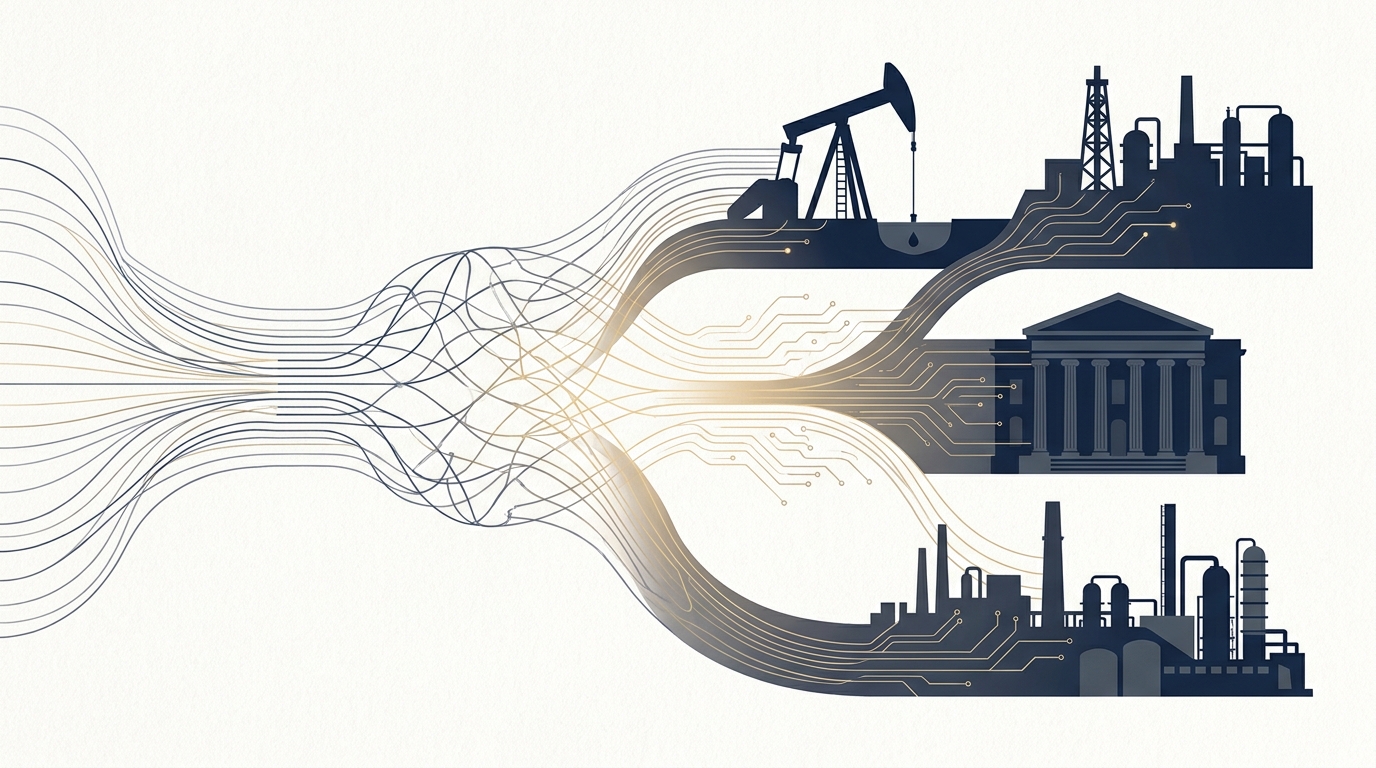
Three non-tech firms illustrate the pattern. Chevron patented genetic programming to predict reservoir production. Bank of America patented machine learning to flag unacceptable electronic communications. Johnson Controls patented AI-driven maintenance optimization. None built a foundation model. Each converted a public advance into a proprietary, patented implementation.
Such narrow applications also tend to fare better under §101 than claims to model architecture in the abstract. The economics and the patent eligibility doctrine both tend to reward specificity.
A Narrowing Window
The window for capturing the AI premium appears to be narrowing from two directions. AI patents grew from 9% to 30% of grants to public firms over the study period. That growth crowds the field and thickens the prior art later filings must clear. Srinivasan on AI is blunt: "It's a tool for winners to take more of these gains at the expense of less innovative companies." The study's logic favors firms that patent their own operations early.
Read the HBS Working Knowledge write-up here: https://www.library.hbs.edu/working-knowledge/tool-for-winners-what-millions-of-patents-reveal-about-ais-value
Method notes: value is the Kogan, Papanikolaou, Seru & Stoffman (2017) stock-return measure of patent value. Grant data run through 2023, so the premium largely predates the more recent generative-AI wave.