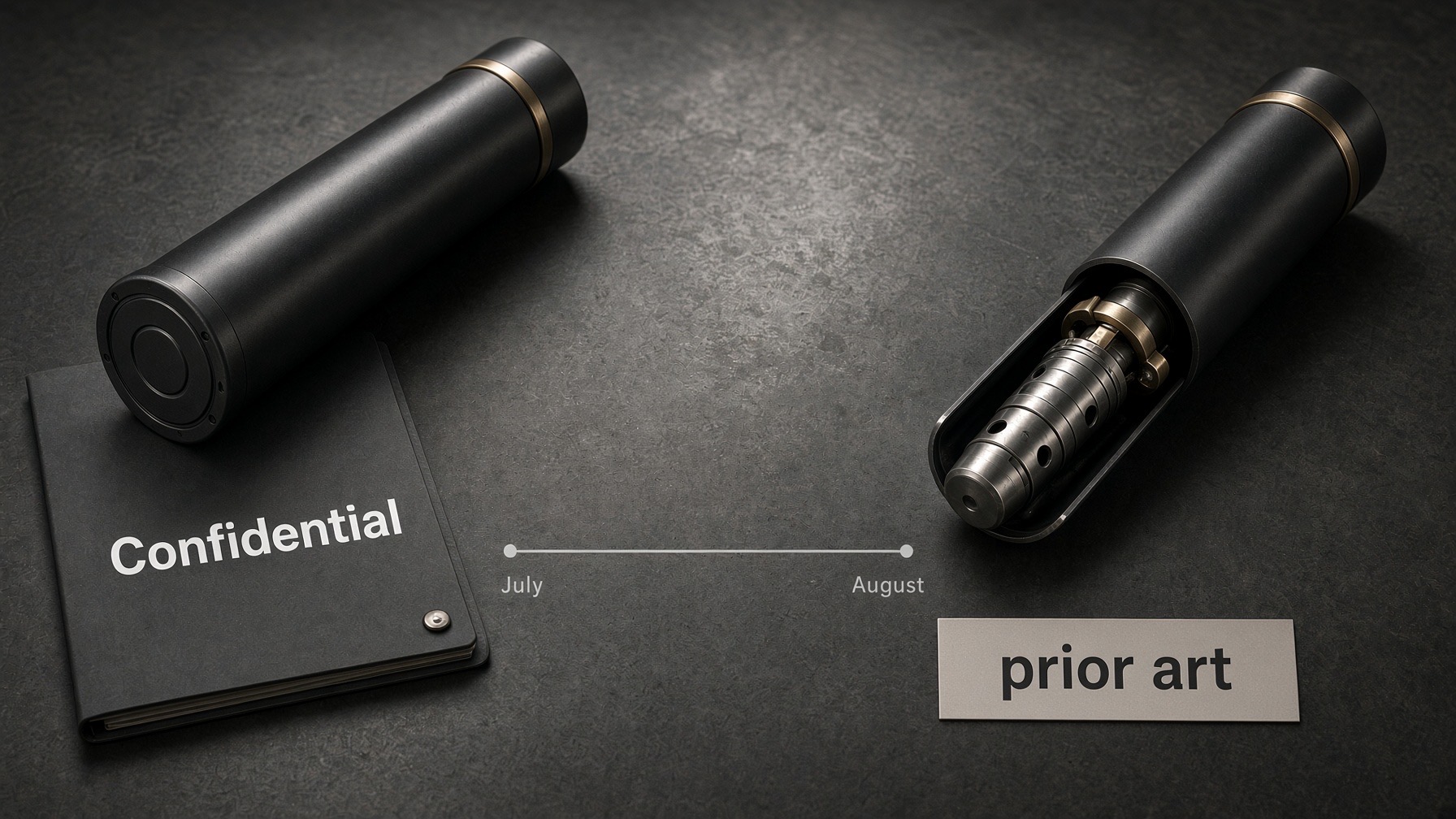
The Federal Circuit holds that a patent owner's private sale does not avoid intervening prior art.
In NCS Multistage v. Nine Energy Service (2026), a Federal Circuit panel ruled that a sale to a single customer was not a "public disclosure" under the America Invents Act (AIA). Under the AIA, a third party's disclosure does not count as prior art against an inventor's patent application if the disclosure came within one year before the inventor filed and the inventor had already publicly disclosed the same subject matter.
The AirLock Dispute
The patent owner, NCS, sold an AirLock tool, used to insert casing pipe into oil wells, to one customer in July 2012. The next month, a third party sold a tool to another customer. Nine Energy, the accused infringer, relied on the third party's sale as prior art, contending the tool embodies the invention claimed in NCS's patent. NCS argued that the July sale was an earlier public disclosure, and a jury found the patent's claims not invalid.
The court held that no reasonable jury could find the AirLock sale was a public disclosure, because a public disclosure must make the invention available to the public. NCS sold the AirLock privately, delivered the tool inside a sealed black tube the customer would have to cut open, and marked the tool's technical documents confidential. The customer signed no nondisclosure agreement, but no evidence showed that anyone beyond the customer learned the features of the claimed invention. The court followed Sanho v. Kaijet (2024), a decision applying the same requirement to an intervening patent filing. The court held the third party's tool to be prior art as a matter of law and ordered a new trial on validity.
An Asymmetry in Patent Protection
As Charles Gideon Korrell explains in The National Law Review, the NCS ruling exposes an asymmetry: a sale can count against an inventor without protecting the inventor. In Helsinn v. Teva (2019), the Supreme Court held that an inventor's confidential sale can qualify as prior art under the AIA. A confidential sale can therefore start the inventor's one-year deadline for filing a patent application, yet under NCS a sale revealing nothing to the public gives no shield against a third party's intervening disclosure.
Implications for AI and Technology Products
The same asymmetry can apply to AI products. AI developers can give early customers paid pilots, evaluations, or hosted access while keeping model weights and training methods out of view. If such an arrangement counts as a sale of a claimed invention, the arrangement may start the one-year filing deadline and leave the developer exposed to a competitor's intervening release.
Neither Sanho nor NCS defines what a sale must reveal to qualify as a public disclosure, so an inventor's filing date, rather than the inventor's first sale, reliably marks when third-party activity is no longer prior art.
Sources
- 𝘕𝘊𝘚 𝘔𝘶𝘭𝘵𝘪𝘴𝘵𝘢𝘨𝘦 𝘐𝘯𝘤. 𝘷. 𝘕𝘪𝘯𝘦 𝘌𝘯𝘦𝘳𝘨𝘺 𝘚𝘦𝘳𝘷𝘪𝘤𝘦, 𝘐𝘯𝘤., No. 2025-1000 (Fed. Cir. Sept. 14, 2026): https://www.courtlistener.com/opinion/10973148/ncs-multistage-inc-v-nine-energy-service-inc/
- 𝘚𝘢𝘯𝘩𝘰 𝘊𝘰𝘳𝘱. 𝘷. 𝘒𝘢𝘪𝘫𝘦𝘵 𝘛𝘦𝘤𝘩𝘯𝘰𝘭𝘰𝘨𝘺 𝘐𝘯𝘵𝘦𝘳𝘯𝘢𝘵𝘪𝘰𝘯𝘢𝘭 𝘓𝘵𝘥., 108 F.4th 1376 (Fed. Cir. 2024): https://www.courtlistener.com/opinion/10025621/sanho-corp-v-kaijet-technology-international-limited-inc/
- 𝘏𝘦𝘭𝘴𝘪𝘯𝘯 𝘏𝘦𝘢𝘭𝘵𝘩𝘤𝘢𝘳𝘦 𝘚.𝘈. 𝘷. 𝘛𝘦𝘷𝘢 𝘗𝘩𝘢𝘳𝘮𝘢𝘤𝘦𝘶𝘵𝘪𝘤𝘢𝘭𝘴 𝘜𝘚𝘈, 𝘐𝘯𝘤., 586 U.S. 123 (2019): https://www.courtlistener.com/opinion/4583335/helsinn-healthcare-s-a-v-teva-pharmaceuticals-usa-inc/
- Charles Gideon Korrell, 𝘞𝘩𝘦𝘯 𝘢 𝘗𝘢𝘵𝘦𝘯𝘵 𝘖𝘸𝘯𝘦𝘳'𝘴 𝘌𝘢𝘳𝘭𝘪𝘦𝘳 𝘚𝘢𝘭𝘦 𝘐𝘴 𝘕𝘰𝘵 𝘌𝘯𝘰𝘶𝘨𝘩 𝘵𝘰 𝘗𝘳𝘰𝘵𝘦𝘤𝘵 𝘈𝘨𝘢𝘪𝘯𝘴𝘵 𝘗𝘳𝘪𝘰𝘳 𝘈𝘳𝘵, The National Law Review (Nov. 9, 2026): https://natlawreview.com/article/when-patent-owners-earlier-sale-not-enough-protect-against-prior-art