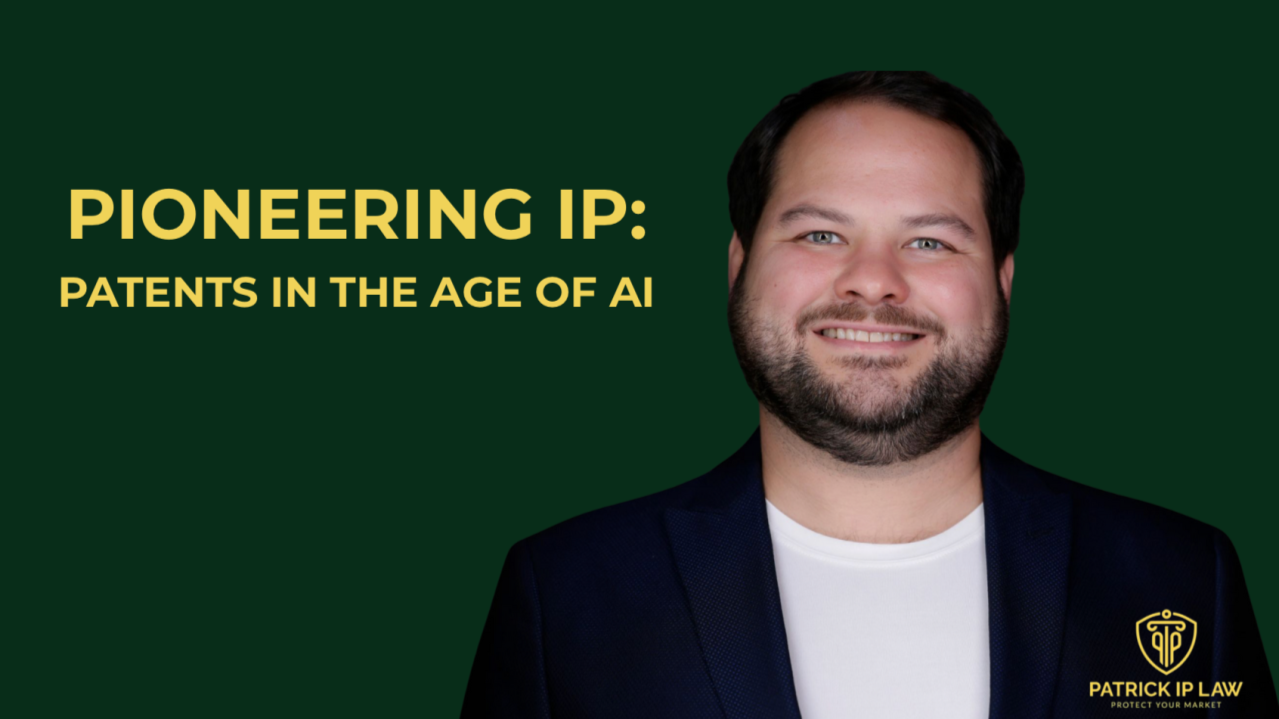
When I left Big Law after more than a decade in patent practice, I didn't set out to reinvent the system—I just wanted to make it work better.
Over the years, I watched innovation accelerate faster than the legal processes meant to protect it. Artificial intelligence was changing everything about how we invent, analyze, and build, but the way we handled intellectual property looked almost the same as it did twenty years ago.
That gap between technology and legal infrastructure is what inspired me to start Patrick IP Law and this new series, Pioneering IP: Patents in the Age of AI.
This newsletter will explore how AI is reshaping the future of patents and IP strategy—for founders, innovators, and the legal professionals who support them.
Why AI Changes the Patent Equation
AI isn't just producing new inventions—it's transforming how we invent.
From generative design tools that help engineers brainstorm faster, to machine learning systems that draft claims or analyze prior art, we're entering a world where human creativity and computational intelligence work side by side.
But this progress comes with new challenges:
- Who owns an AI-generated invention?
- How should we measure originality when algorithms learn from vast datasets?
- Can patent systems built for the industrial age adapt to the digital one?
The law hasn't fully caught up. For startups and established companies alike, that uncertainty can make IP strategy both more important—and more complicated—than ever before.
Where Opportunity Lives
The companies that succeed in the AI era won't just be the ones who innovate the fastest.
They'll be the ones who protect strategically—filing early, thinking globally, and integrating technology into every stage of the IP process.
AI tools can already help identify patentable opportunities, draft filings, and even flag potential conflicts before they arise. But tools alone aren't enough. What matters is how intelligently we use them—and how we combine technology with sound legal judgment.
That's the space I want to explore in this newsletter:
The intersection of AI capability and human strategy.
What to Expect in Future Issues
Each edition will share practical, accessible insights on topics like:
- How AI is changing prior art searches and prosecution strategy
- What founders should know before filing their first patent
- How law firms can adopt AI responsibly without compromising quality or ethics
- The real-world lessons from USPTO pilots like the ASAP! program
My goal is to make this a resource for anyone interested in the future of innovation—whether you're building a startup, managing a portfolio, or shaping the next chapter of intellectual property law.