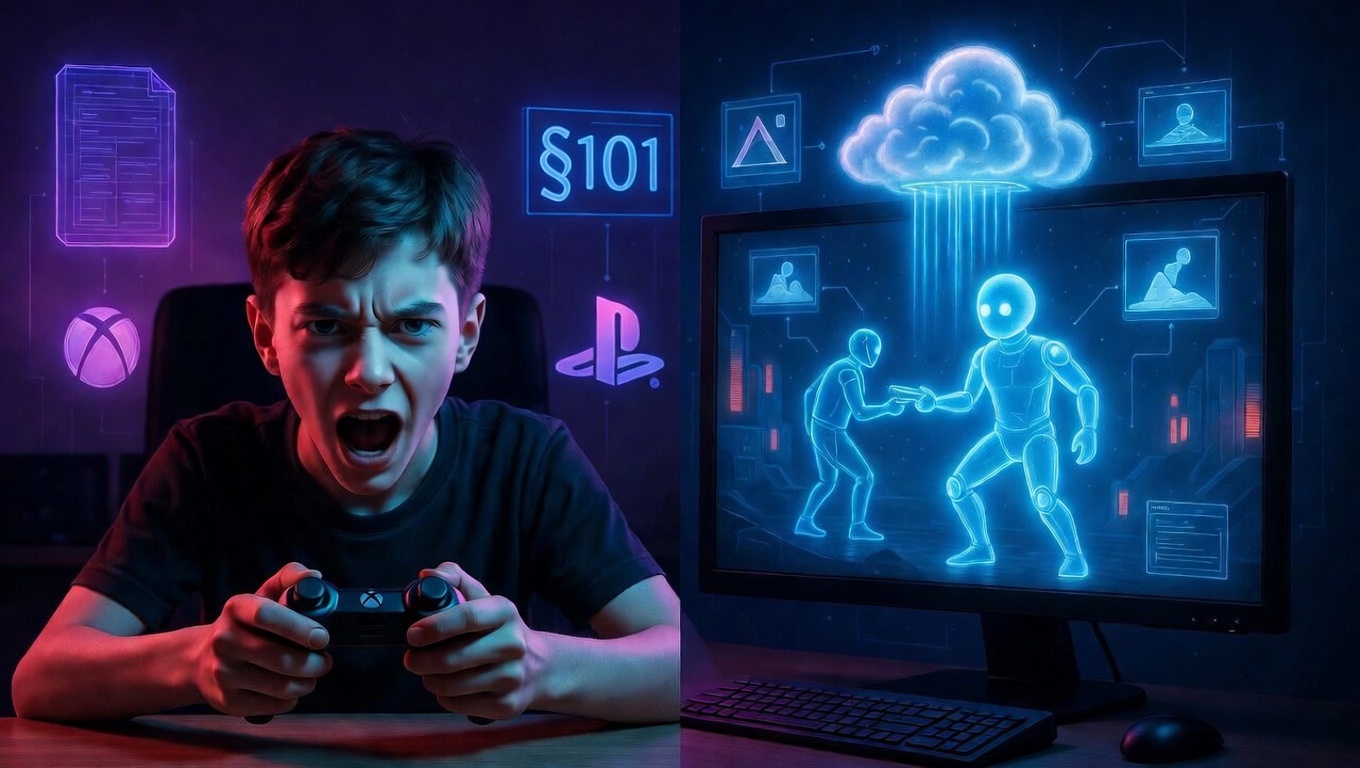
Microsoft's recent AI-enabled gaming patent application (US2026/0042004, published Feb. 12, 2026) might be every frustrated gamer's dream—and every AI patent prosecutor's fresh §101 stress test.
Titled "State Management for Video Game Help Sessions," the cloud-based system:
- Detects player struggle through repeated failures
- Offers to hand control to a human or AI helper
- Streams the helper's inputs back in real time
- Lets the player accept the updated game state or reject it and retry
Sony's earlier AI "Ghost Player" application (US2025/0121289, published April 17, 2025) stakes out overlapping ground. Two platform leaders are converging on similar player-assistance technology.
For AI patent lawyers, these applications raise critical §101 questions following the Federal Circuit's April 2025 decision in Recentive Analytics, Inc. v. Fox Corp. The court was clear: applying conventional ML methods (e.g., support vector machines or decision trees for frustration mapping) to a new environment isn't enough. The claims and specification must show how the detection system works technically, not just what it produces.
Microsoft's cloud-based state handoff architecture stands out as potentially strong ground. The application delivers a specific technical implementation with measurable real-time streaming and snapshot-management implications. That's where defensible subject matter eligible claims tend to live.
As an update, Sony's application recently received a Notice of Allowance (mailed Feb. 25, 2026) from the USPTO, allowing claims with no §101 rejection raised. This aligns with the USPTO's 2025 AI eligibility guidance encouraging technical AI implementations, yet post-issuance litigation risk in the courts remains.
Worth watching as the AI-gaming IP race evolves.
Read more on these gaming applications via GameRant.