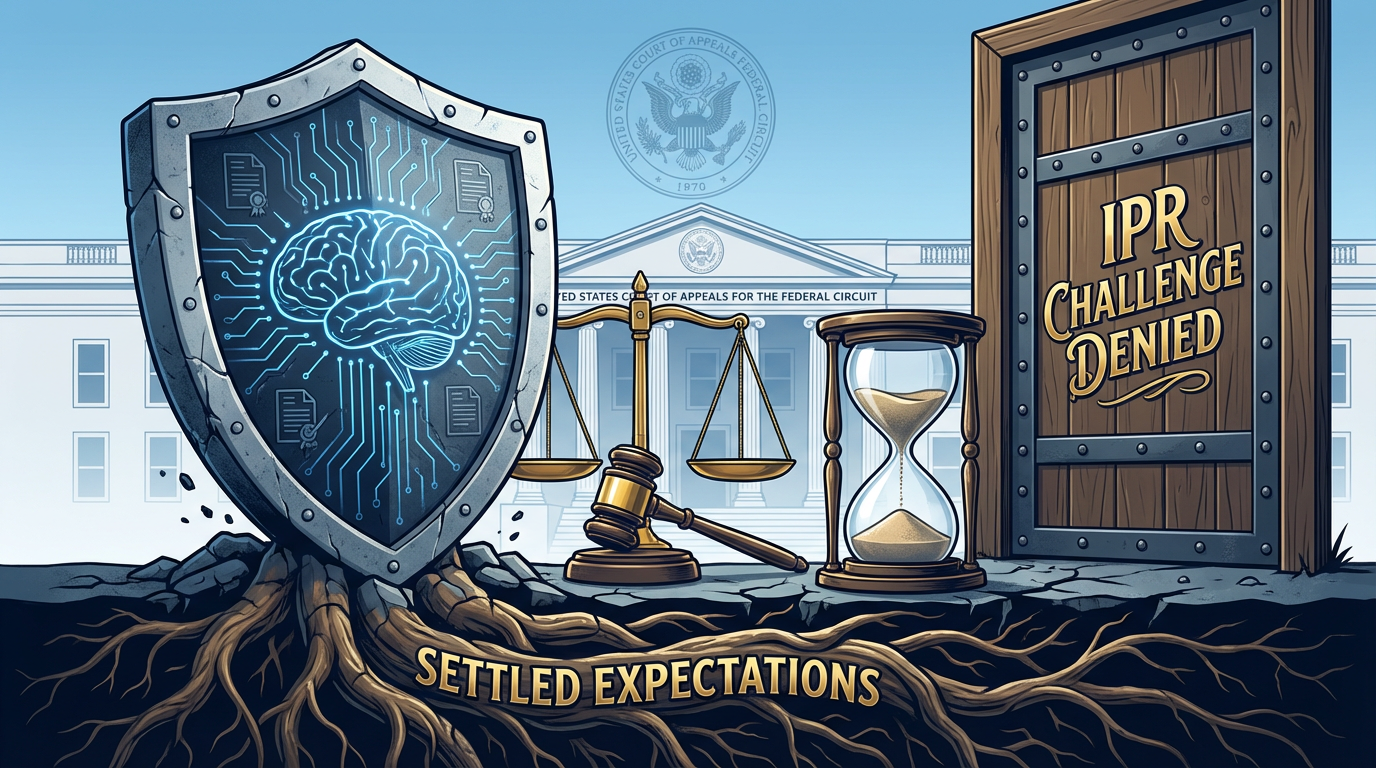
The Federal Circuit has denied yet another mandamus petition challenging the USPTO Director's use of the "settled expectations" doctrine in IPR institution decisions.
The Ruling: In re Kahoot! AS
In In re Kahoot! AS (nonprecedential order, Feb. 25, 2026), the court declined to disturb the Director's refusal to institute review of a patent in force for more than six years. Under the Director's interim workload-management process, the USPTO reasoned that the patent owner had developed "strong settled expectations"—mirroring the six-year damages limitations period under 35 U.S.C. § 286—and that instituting an IPR would be an inappropriate use of PTAB resources.
The Mandamus Standard
The Federal Circuit emphasized the steep hurdle for mandamus relief, requiring petitioners to show a "clear and indisputable right" to the requested action. Because Congress made institution decisions "final and nonappealable" under 35 U.S.C. § 314(d), the court reaffirmed that mandamus is ordinarily unavailable absent a colorable constitutional claim—ultra vires arguments do not open the door.
A Growing Pattern
This ruling continues a clear and growing pattern, with the Federal Circuit rejecting multiple similar challenges in recent months.
Key Takeaway
Patent age and procedural posture are increasingly strategic variables in IP disputes:
- For AI and tech patent owners, this bolsters the stability of mature portfolios against late IPR challenges.
- For potential challengers, it underscores the need for prompt PTAB filings or parallel validity pathways such as ex parte reexamination.
As clients and fellow practitioners navigate these evolving PTAB dynamics, early strategic planning remains essential. What adjustments have you made to your IPR or portfolio strategies in light of these trends?
Read more from Rose Esfandiari in IPWatchdog, Inc: https://lnkd.in/eQYeeGcS