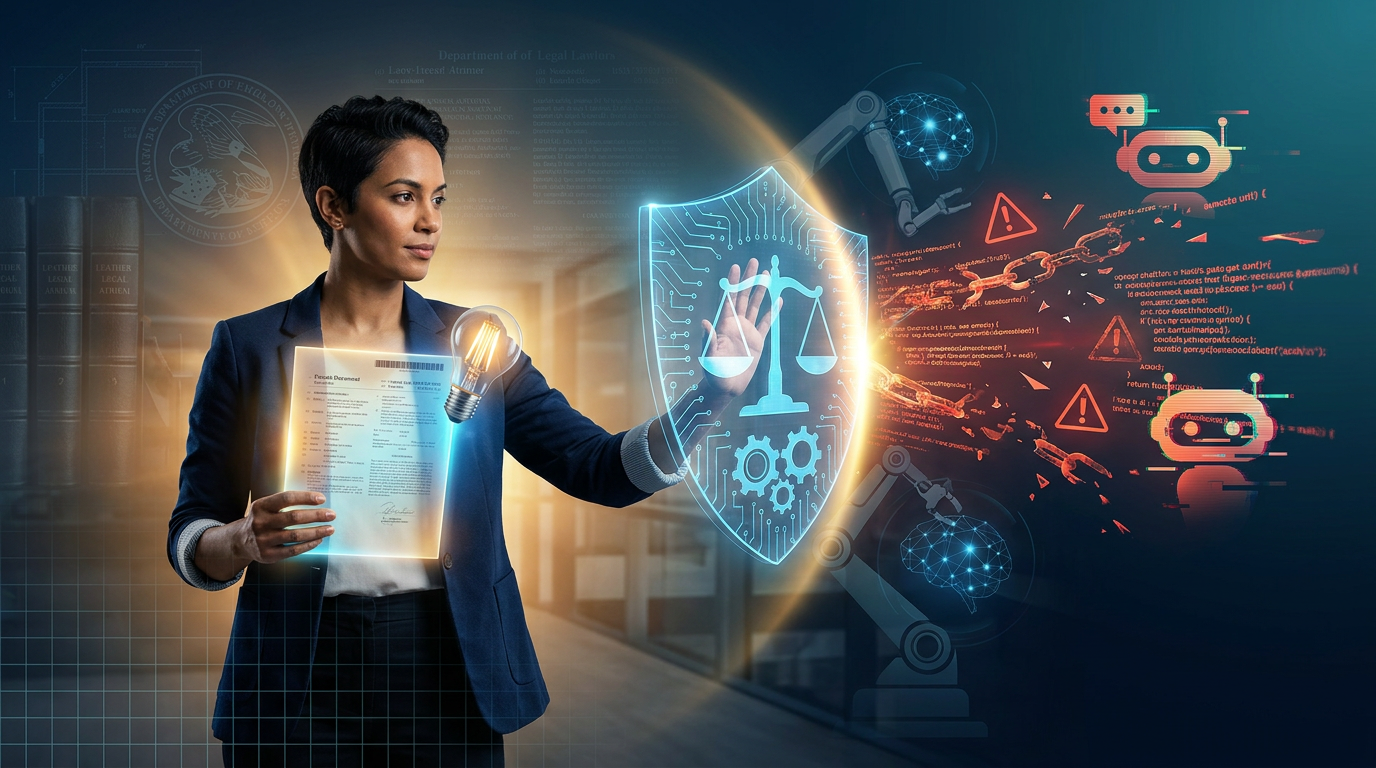
Patent lawyers are a shield between clients' AI habits and the potential loss of patent rights. The risks at the invention disclosure stage are real and immediate.
The Inventorship Trap
In November 2025, the USPTO rescinded its February 2024 AI inventorship guidance in its entirety. The revised guidance reaffirms the longstanding conception standard: only a natural person can be an inventor, and that person must have conceived the invention. Named human inventors are presumed correct, but applicants owe duties of candor and reasonable inquiry. If clients rely on AI to generate core inventive concepts — rather than merely refine or structure their own ideas — they risk failing the human-conception threshold.
The Confidentiality Trap
Prompting consumer-tier AI tools with sensitive invention details can destroy the confidentiality required for patentability, trade secret protection, and privilege. Two recent federal decisions illustrate the stakes. In Trinidad v. OpenAI (N.D. Cal., Jan. 5, 2026), Judge Tigar dismissed a trade secret claim because the pro se plaintiff developed her frameworks through ChatGPT while failing to take reasonable measures to maintain secrecy. In United States v. Heppner (S.D.N.Y., Feb. 17, 2026), Judge Rakoff held that a defendant's exchanges with the consumer Claude app were not protected by attorney-client privilege or work product, citing the platform's terms of service and lack of confidentiality.
What Applicants Should Be Doing Now
- Center the disclosure on the inventor's substantive contributions. Inventive concepts must originate with the human inventor; AI can capture, structure, or expand them — but not replace them.
- Audit AI usage. Vet account tiers and terms. Consumer-grade apps pose serious risks. Require attorney-supervised or enterprise accounts with strong confidentiality protections.
- Use AI strategically for refinement, not conception. Leverage AI to structure disclosures, generate examples or alternatives, and refine language — always after the inventor's independent input and under attorney review before filing.
- Document human conception early. Capture the inventor's own words via structured intake before any AI processing. These records become critical evidence of human inventorship.
Vibe Patent is an app built for exactly this challenge: AI-powered, attorney-supervised patent preparation with structured, inventor-centered intake, and strict confidentiality protection. Try it at https://vibepatent.ai.
Read more from David Jordan and Benjamin Halkowski of Fish & Richardson P.C. via Bloomberg Law: